
Article: Is Textured Art Still in Style? Your Guide to Modern Dimension
Is Textured Art Still in Style? Your Guide to Modern Dimension
Interior design trends come and go, but our innate desire for homes that feel warm, inviting, and uniquely personal remains a constant driving force. Over the past few years, flat, ultra-minimalist spaces have gradually given way to interiors rich in character, personality, and physical depth. If you are currently staring at a blank wall and wondering whether textured art is still in style, the short answer is an emphatic yes. Far from being a passing fad, textured artwork has successfully cemented its place as a staple of contemporary interior design. It beautifully bridges the gap between minimalist simplicity and maximalist expression, offering profound visual interest without ever cluttering a room.
The Evolution of Tactile Decor
For a very long time, the art world was heavily dominated by flat canvases, glossy photographs, and sleek digital prints. While these traditional mediums certainly have their place in the design world, relying on them entirely can sometimes leave a living space feeling clinical, static, or strictly two-dimensional. The massive resurgence of physical texture in home decor is a direct response to this hyper-polished look. We are now craving elements that feel organic, handmade, and deeply grounded in nature.
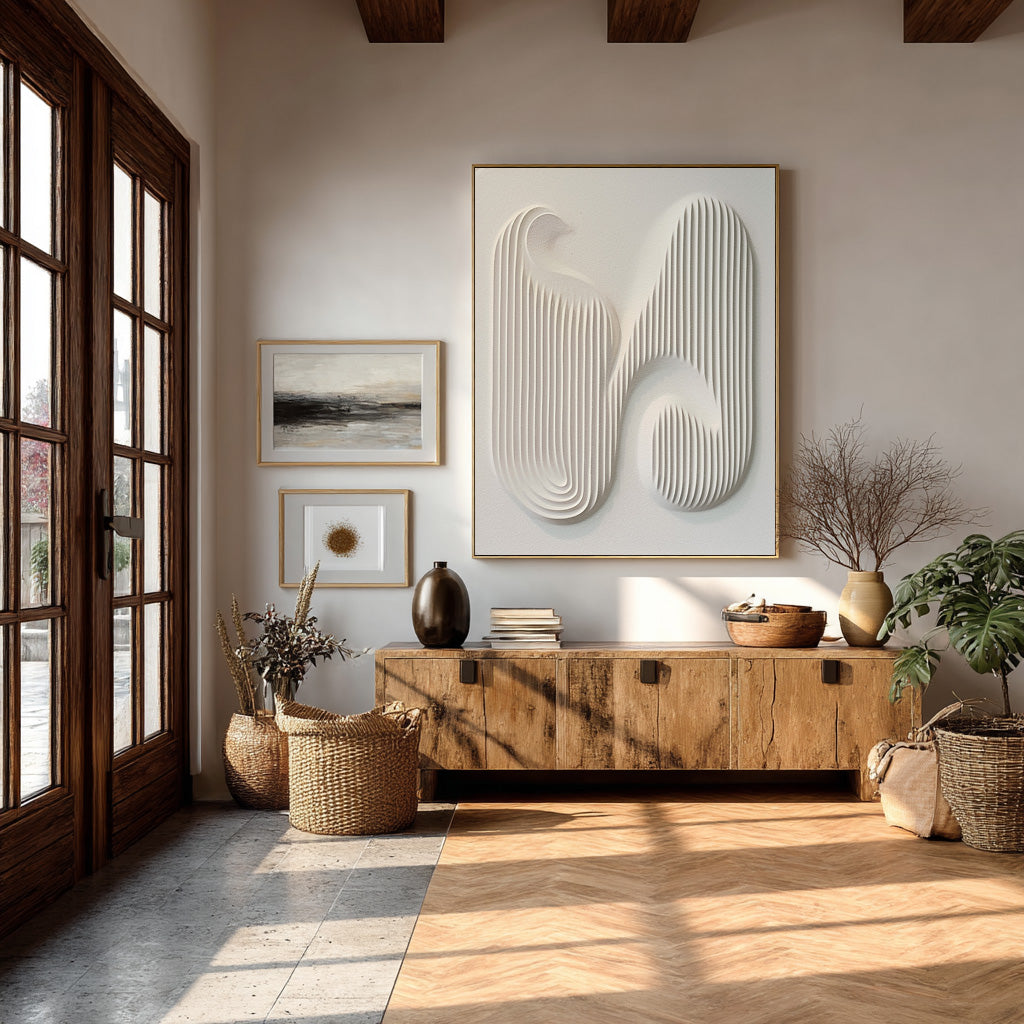
Integrating a piece of Modern Textured Wall Art into a room immediately breaks up the monotony of flat drywall and uniform furniture lines. Today’s design trend focuses heavily on embracing organic, raw materials. We are seeing incredible creativity from artists who use heavy impasto palette knife strokes, thick molding paste compositions, woven natural fibers, and complex mixed media utilizing raw stone or reclaimed wood. The color palettes have also matured beautifully. While monochrome white and cream pieces remain popular, there is a stunning shift toward earthy terracottas, deep olive greens, and muted ochres that specifically highlight the structural highs and lows of the canvas.
Why Dimension Matters in Contemporary Spaces
One of the primary reasons textured artwork maintains its iron grip on modern design is its highly dynamic relationship with light. Unlike traditional posters or flat prints that look uniform and identical regardless of the time of day, raised surfaces interact dynamically with your environment.
Unlike traditional flat prints, 3d Textured Wall Art relies heavily on environmental lighting to reveal its full character and complexity. As natural sunlight streams through your windows from morning to evening, the shadows cast by the artwork shift across the canvas. This gives the piece a living, breathing quality that changes throughout the day. Curators and interior experts at Artvista Gallery note a massive surge in collectors looking for pieces that actively interact with room lighting. This specific demand stems from a collective desire to make our living spaces feel less static and more sensory.
How to Style Textured Pieces in Your Home
Incorporating dimensional elements into your home doesn't require a complete decor overhaul. In fact, these tactile pieces are incredibly forgiving and blend seamlessly with various design aesthetics. Whether your home leans heavily toward Japandi, organic modern, rustic farmhouse, or sleek industrial, there is a way to make texture work for your space.
When styling 3d Modern Wall Art, placement and balance are absolutely everything. Because these pieces carry significant visual weight, they perform exceptionally well as anchoring statements. They look phenomenal hung above a low-profile living room sofa, anchoring a dining room sideboard, or gracing the empty space above a primary bedroom headboard.
-
Embrace Textural Contrasts
Pair a rugged, highly textured plaster piece with a sleek marble countertop, a smooth glass coffee table, or a buttery leather sofa. The juxtaposition creates a sophisticated, multi-layered look.
-
Mind the Scale and Proportion
Small textured pieces can look lost on a large, empty wall. Don't be afraid to opt for larger, statement-sized canvases to give the heavy texture room to breathe.
-
Keep the Frame Simple
Let the artwork do the heavy lifting. Floating frames in natural oak wood or matte black protect the delicate edges without distracting from the physical dimension.
If you are unsure where to start your art-buying journey, exploring the curated collections at Artvista Gallerycan give you tremendous inspiration for how different scales and mediums fit together.
A Timeless Investment for Your Walls
So, is textured art still in style? Not only is it firmly in style right now, but it has officially transitioned from a hot trend into a reliable, classic design tool. By introducing physical depth, captivating shadow play, and unparalleled sensory richness, dimensional artwork elegantly solves the frustrating problem of flat, lifeless walls. Investing in texture is a surefire way to elevate your home's aesthetic, ensuring your space feels curated and intentional for many years to come.
Frequently Asked Questions (FAQs)
1. How do I clean and maintain 3d Textured Wall Art?
Dusting it gently with a soft microfiber cloth or a light feather duster is usually all you need. Avoid using water, damp cloths, or harsh cleaning chemicals, as they can soften or break down the plaster and paint over time.
2. Will Modern Textured Wall Art make a small room feel cluttered?
Not at all! The added physical dimension actually creates a sense of depth that can make a tight room feel larger and more dynamic. Sticking to a neutral or monochromatic color palette ensures it adds visual interest without overwhelming the space.
3. Is it safe to hang textured artwork in a bathroom?
It depends entirely on the materials used. High humidity and steam can damage unsealed plaster, molding paste, or raw canvas. If you want to hang a piece in a damp area, ensure it is professionally sealed and the room is well-ventilated.
4. What is the best way to light dimensional canvas art?
Angled, directional lighting works absolute wonders. A picture light mounted directly above the frame or track lighting directed from the side will cast beautiful, dramatic shadows across the ridges and peaks of the piece.
5. Can I mix 3d Modern Wall Art with standard framed flat prints?
Absolutely. Mixing tactile, heavy canvases with flat digital photographs or delicate line drawings creates a beautifully curated gallery wall. It provides varying levels of visual weight that keep the eye moving.
6. Are these pieces too heavy to hang on standard drywall?
While they are slightly heavier than your average printed canvas due to the thick molding pastes and heavy acrylics used, most are still lightweight enough to hang securely. Just be sure to use standard drywall anchors or heavy-duty picture hooks rather than simple nails.
7. Should I try to DIY textured art or buy it from a gallery?
While creating your own DIY plaster art can be a fun weekend craft project, professionally crafted pieces feature higher-quality, archival materials. Gallery pieces are properly cured and sealed, meaning they won't crack, yellow, or flake off onto your floor over time.
Transform Your Space with Artvista Gallery
Ready to transform your blank walls into captivating, tactile masterpieces with Artvista Gallery. Browse our exclusive online collection of Modern Textured Wall Art to discover dimensional pieces that perfectly match your aesthetic. Elevate your space with stunning textures and bring a new level of character into your home.


Leave a comment
This site is protected by hCaptcha and the hCaptcha Privacy Policy and Terms of Service apply.