
Article: Horizontal Wall Art for Living Room: Design Ideas & Proportions for a Balanced Space
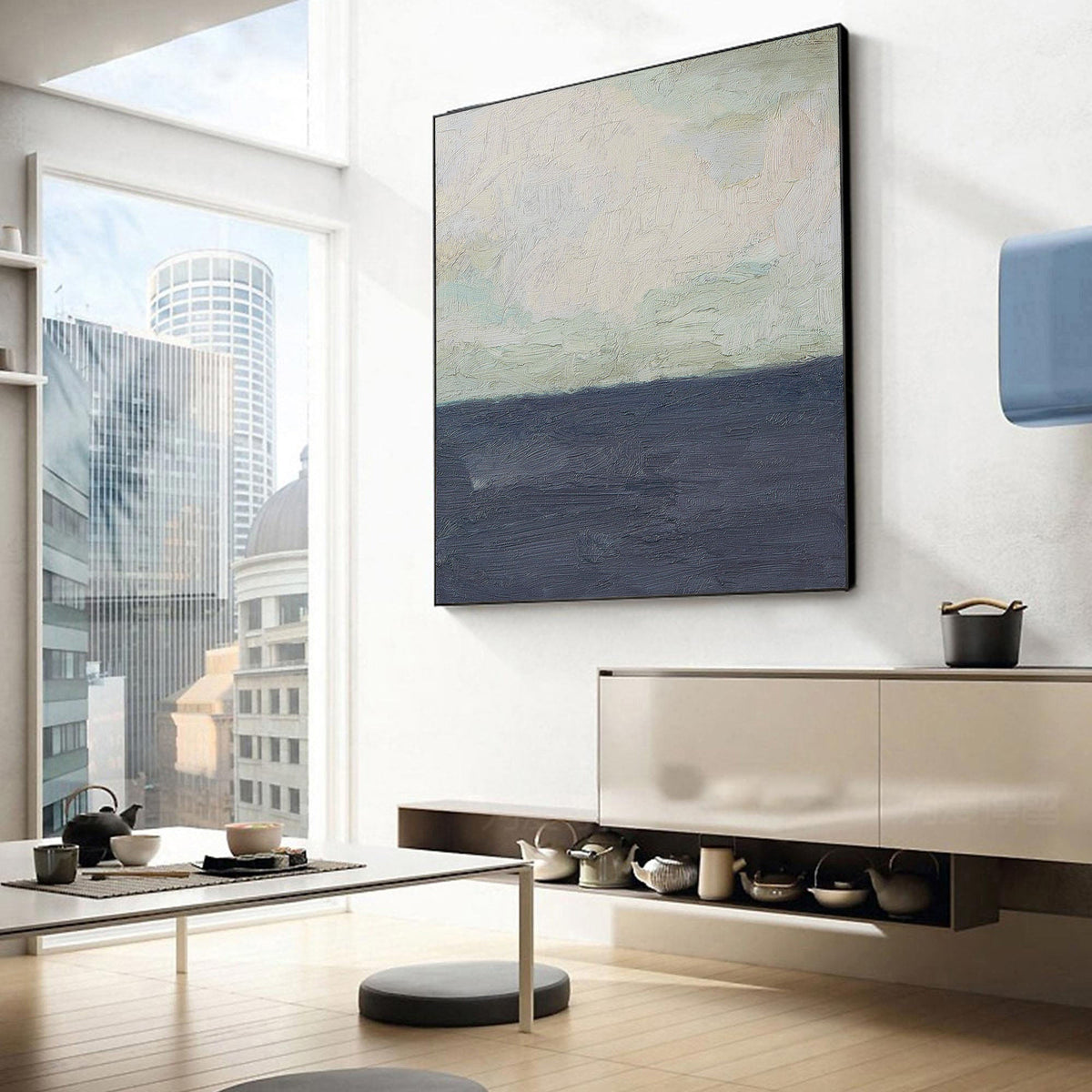
Horizontal Wall Art for Living Room: Design Ideas & Proportions for a Balanced Space
You bring the new sofa home, set the rug down, and step back to admire the room. Then your eyes land on the long, bare wall above the couch, and it suddenly feels like the least finished spot in the house. Choosing horizontal wall art for living room spaces sounds easy until you start comparing size charts and wondering whether 48 inches is too small, 72 is too much, or a pretty piece will look flat once it is hung.
The good news: wide, horizontal pieces are the most forgiving shape to decorate with, and a few simple rules remove most of the guesswork. So how do you pick one that truly fits your wall, your sofa and your style?

Why Horizontal Wall Art Works Best for Living Room Spaces
Look at what a typical living room holds: a wide sofa, a long media console, a mantel, maybe a sideboard. Nearly everything sits along a horizontal line, and a wide painting repeats it, so the wall feels composed instead of busy. A tall, narrow piece above a three-seat sofa tends to drift away from the furniture, while a wide canvas settles onto it as if it had always been there. That is why horizontal wall art for living room walls works where other shapes struggle.
Working With a Horizontal Room
Many homes are, in effect, a horizontal room: wider than tall, especially apartments with standard 8-foot (about 2.4 m) ceilings. A wide piece pulls the eye sideways, making the wall feel broader and the ceiling less noticeable. Landscapes with a clear horizon line do this especially well.
Wide formats also give hand-painted work room to breathe. Palette-knife ridges and layered pigment read across the full width, shifting as you walk past and as daylight moves through the room. A flat print cannot do that. If you are weighing an original against a printed poster, here is the difference:
|
Hand-painted oil painting |
Machine-printed poster |
|
|---|---|---|
|
Surface |
Raised brushwork you can see and feel |
Flat, with texture imitated at best |
|
Light |
Ridges catch light and shift through the day |
Looks the same at every hour |
|
Color |
Layered pigment with real depth |
One thin layer of ink |
|
Uniqueness |
One of a kind |
Identical copies made in bulk |
Sizing and Proportions: The Designer Rules You Need to Know
Size is where most people slip, and nearly always in the same direction: too small. A modest piece floating on a big wall looks like a postage stamp on an envelope. These five rules keep you on track.
- Match the furniture, not the wall. Aim for two-thirds to three-quarters of the sofa's width. For an 84-inch (213 cm) sofa, that is roughly 56 to 63 inches (142 to 160 cm).
- Think in ratios. Proportions near 2:1 or 3:2 look naturally balanced, such as 60 x 30 inches (150 x 75 cm) or 48 x 32 inches (120 x 80 cm).
- Measure sets as one piece. For a 2-piece or 3-piece set, leave 2 to 3 inches (5 to 8 cm) between panels and measure the whole group.
- When torn, go larger, especially on walls wider than 10 feet (3 m).
- Tape it out first. Mark the size on the wall with painter's tape and live with it for a day.
A 60-inch (152 cm) loveseat pairs well with a piece 40 to 45 inches (100 to 115 cm) wide, while a long sectional can handle 72 inches (183 cm) or more. Horizontal wall art that covers less than half the furniture below it almost always looks undersized.

Popular Styles of Horizontal Wall Art for Modern Living Rooms
Once the size is settled, style is the fun part. These looks work best in modern living rooms:
- Wabi-sabi textured neutrals. Cream, sand and warm gray with plaster-like surfaces that celebrate imperfection. They suit linen sofas and oak tables.
- Modern abstract. Bold color fields and gestural lines that energize a neutral room. Repeat one shade in a cushion or vase to tie it together.
- Natural landscapes. Misty mountains, calm seas, fields at dusk. A visible horizon gives the eye somewhere to rest.
- 3D textured minimalist pieces. Thick, sculptural layers in one or two tones, where light and shadow do most of the work.
- Multi-panel sets. A 2-piece or 3-piece set carries one image across the wall, adding rhythm without needing a single oversized canvas.
Whatever you choose, check the color temperature. Warm tones such as ochre, terracotta and cream make a cool gray sofa feel cozier, while sage, slate blue and soft white calm a room with strong afternoon sun. Match undertones rather than exact shades, and the painting will feel like it belongs. Horizontal wall art in a restrained palette also ages well, so it still works the next time you change the sofa.

How to Style Horizontal Wall Art Across Different Living Room Zones
Where a painting hangs changes how it should be styled.
Above the Sofa
This is the classic spot. Hang the bottom edge 6 to 10 inches (15 to 25 cm) above the back cushions so art and sofa read as one group, and keep the piece narrower than the sofa. A single large canvas feels calm; a three-piece set feels more rhythmic.
Over a Console, Sideboard or Mantel
Shallower furniture suits a slightly smaller piece, around two-thirds of the console's width, hung 4 to 6 inches (10 to 15 cm) above the surface. Let a lamp or vase overlap the lower edge for a relaxed, layered look. One caution: avoid hanging an oil painting above a fireplace you use often, since heat and smoke can damage the paint.
Dining and Reading Corners
In open-plan homes, a horizontal piece on the wall between zones ties them together. Choose a calmer landscape near a reading chair, and echo its palette in a smaller piece across the room.
Lighting and Care for Hand-Painted Oil Paintings
Textured paintings change through the day. Morning daylight looks cooler and flatter, late afternoon sun rakes across the surface and exaggerates every ridge, and evening lamplight from 2700K to 3000K bulbs deepens the colors. A picture light angled from slightly above makes the brushwork cast soft shadows.
Care is gentle. Keep the painting out of direct sun, away from heaters and kitchen steam. Dust it every few weeks with a soft, dry microfiber cloth, never with water or spray cleaners, and leave a little air space behind the canvas.
Conclusion
A bare wall is only a few decisions away from feeling finished: a width of about two-thirds of your sofa, a hanging height that ties art to furniture, and a texture and palette that suit how you live.
When you are ready, browse the Artvista Gallery online store for hand-painted horizontal wall art for living room spaces, from textured abstracts and wabi-sabi neutrals to calm landscapes and 2-piece or 3-piece sets. Every piece is painted by hand by professional artists, and shipping is free worldwide. Your sofa wall is waiting.
FAQ About Horizontal Wall Art for Living Room
How big should horizontal wall art be above a living room sofa?
Aim for about two-thirds to three-quarters of the sofa's width. On an 84-inch (213 cm) sofa, that means a piece roughly 56 to 63 inches (142 to 160 cm) wide. Anything under half the width tends to look lost.
How high should I hang horizontal wall art above the couch?
Hang the bottom edge 6 to 10 inches (15 to 25 cm) above the back of the couch. With standard 8-foot ceilings, the center of the piece usually lands around 55 to 60 inches (140 to 152 cm) from the floor, a comfortable eye level.
Can horizontal wall art make a living room look bigger?
It can make the room feel wider, though it will not change its real size. A wide piece pulls the eye sideways, and light, low-contrast tones or a landscape with a soft horizon add depth. In a small space, favor airy colors over very dark, dense compositions.
Where else can I hang horizontal art in a living room besides above the sofa?
Try a console table, sideboard, mantel, dining wall, the wall behind a reading chair, or beside the TV. An entryway or hallway also suits horizontal wall art, and a deep shelf can hold a smaller piece leaning against the wall.
Should I choose one large horizontal piece or a 2-piece / 3-piece set?
Choose one large piece for a calm, uncluttered look, especially with textured abstracts whose brushwork should read as a single surface. Choose a 2-piece or 3-piece set for very wide walls or landscapes that flow across panels, since the gaps add rhythm. Either way, measure the whole group.

Leave a comment
This site is protected by hCaptcha and the hCaptcha Privacy Policy and Terms of Service apply.